
By Marcus Holloway — Independent Veterans Benefits Writer | Reviewed & updated July 28, 2026
Independent and non-government. This site is not affiliated with, endorsed by, or sponsored by the U.S. Department of Veterans Affairs (VA) or any government agency. For official information, visit VA.gov.
The Form That Does the Talking When You Can’t
Let’s get straight to it: a VA DBQ for respiratory conditions is one of the most useful — and least understood — pieces of paper in a lung-related disability claim. DBQ stands for Disability Benefits Questionnaire. It is a standardized VA form that a clinician fills out to document exactly what a condition is, how it was diagnosed, and how badly it limits you, in the precise format VA rating specialists need. No essay, no guesswork — check boxes, test values, and findings that map directly onto the rating schedule.
I’ve talked with plenty of veterans who walked out of a Compensation & Pension exam wondering what just happened. The examiner typed for twenty minutes, asked a few questions, listened to their chest, and that was it. What that examiner was doing, in most cases, was completing a DBQ. Understanding what a VA DBQ for respiratory conditions asks — before your exam — helps you make sure the answers reflect your real day-to-day breathing, not just one decent morning in a clinic chair.
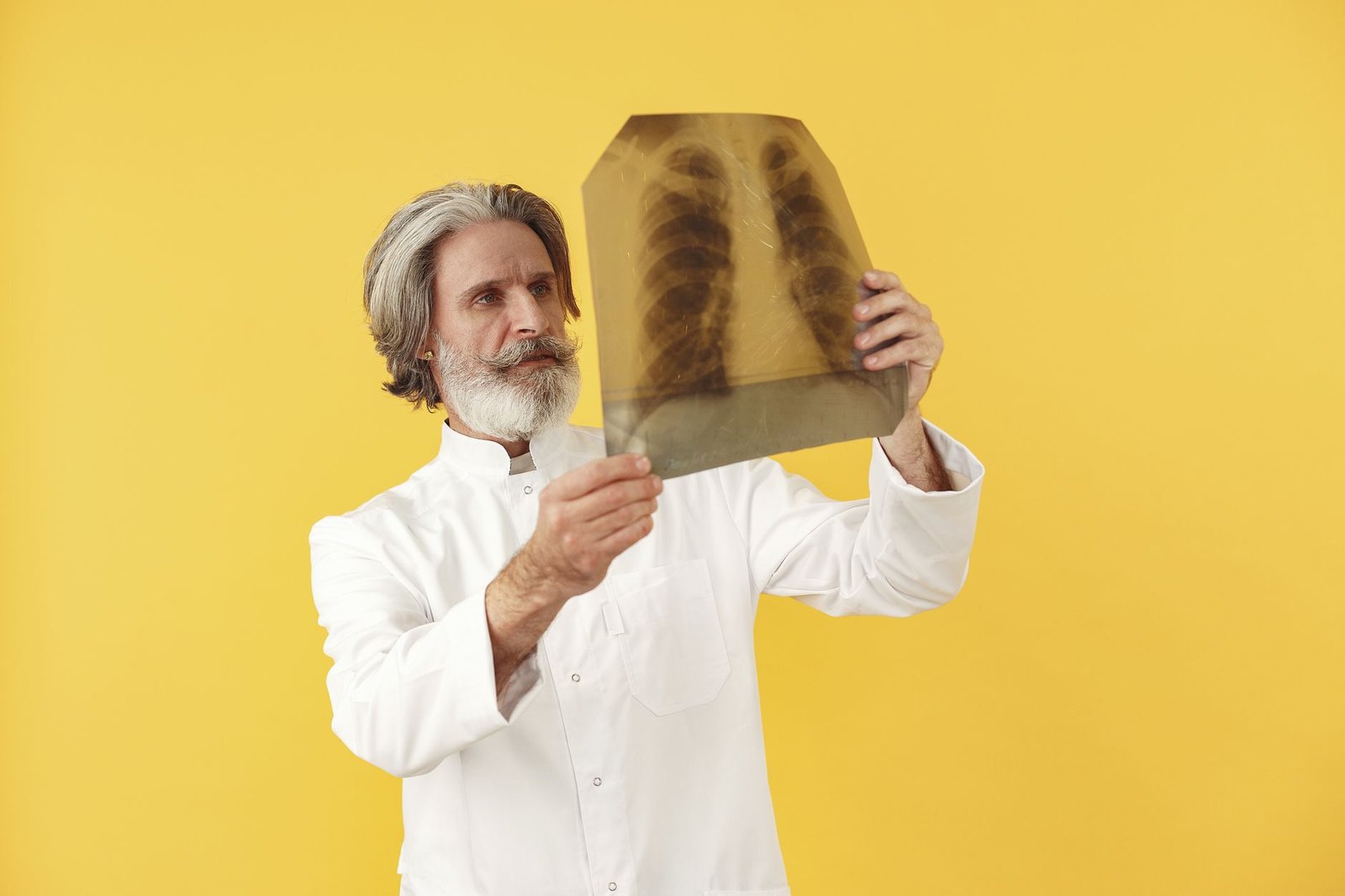
Part 1: What a DBQ Is and Who Fills It Out
The VA developed Disability Benefits Questionnaires so that medical evidence arrives in a consistent, rating-ready format. There are dozens of DBQs, each matched to a body system or condition. For lung and airway problems, the ones you’ll hear about most are the Respiratory Conditions DBQ (covering conditions such as asbestosis, COPD, chronic bronchitis, emphysema, interstitial lung disease, and restrictive disease) and, for cancers, the DBQ used for oncology conditions. Sleep apnea has its own separate DBQ.
Two kinds of people complete these forms. First, VA or VA-contracted examiners fill one out at your C&P exam — you don’t have to do anything except show up and answer honestly. Second, many DBQs are public: your own pulmonologist or treating physician can download the current form from the VA’s official find-a-form page on VA.gov and complete it based on their records and testing. The VA generally must consider a properly completed DBQ from a private doctor as medical evidence. It doesn’t replace the VA’s right to schedule its own exam, but it puts your treating doctor’s findings into the record in the format raters use.
Part 2: What a VA DBQ for Respiratory Conditions Actually Asks
Open a VA DBQ for respiratory conditions and you’ll find sections that track the rating criteria almost line by line:
- Diagnosis section — the specific condition, date of diagnosis, and how it was confirmed (imaging, biopsy, pulmonary function testing).
- Medical history — onset, course, and whether the condition requires medication such as inhaled bronchodilators, corticosteroids, or outpatient oxygen therapy.
- Pulmonary function tests (PFTs) — the heart of the form. Examiners record FVC (forced vital capacity), FEV-1, the FEV-1/FVC ratio, and DLCO (diffusion capacity), each as a percentage of predicted values.
- Other findings — cor pulmonale, pulmonary hypertension, episodes of respiratory failure, need for oxygen.
- Functional impact — how the condition affects your ability to work. Short, but important, especially if unemployability is ever in play.
Why the obsession with test numbers? Because the VA’s rating schedule for the respiratory system, found in 38 C.F.R. § 4.97, assigns percentages largely by PFT values. As of the 2026 rate tables, the payment tied to each percentage changes annually, so check the current VA compensation rates page rather than relying on any dollar figure printed in an article.
Part 3: DBQs in Asbestos-Related Claims
For veterans with asbestos-related disease, a VA DBQ for respiratory conditions is where medical reality gets translated into rating language. A few practical points:
Asbestosis and interstitial disease are typically rated on FVC and DLCO. If your DLCO is the worst number — common in asbestos scarring — make sure a complete PFT with diffusion capacity was actually performed. A spirometry-only test can understate impairment.
Mesothelioma and lung cancers follow a different track: active malignancy is generally rated at 100 percent, with re-evaluation after treatment ends based on residuals — and those residuals are documented on, you guessed it, a respiratory DBQ. If you’re at the beginning of that road, our plain-English guide to how this cancer gets diagnosed and documented walks through the medical side.
Cause still matters. A DBQ documents severity; it is not, by itself, a nexus opinion. For diseases with multiple possible causes, the examiner may also address etiology — a topic we cover in depth in our article on how tobacco history gets weighed against asbestos exposure. And because asbestos illness can surface decades after the engine room, the exposure story itself deserves care; see our piece on why a 40-year gap doesn’t sink a claim.
Part 4: How to Use a DBQ, Step by Step
- Step 1 — File the claim first or alongside. A DBQ supports a claim; it doesn’t start one. File VA Form 21-526EZ through VA.gov’s how-to-file page, with a VSO’s free help if you want it.
- Step 2 — Ask your treating doctor. Print the current respiratory DBQ from VA.gov’s forms page. Ask your pulmonologist to complete it during a visit, attaching recent PFT results. Some private doctors charge for form completion; ask up front.
- Step 3 — Check it before submitting. Unsigned forms, missing PFT values, or an out-of-date form version are common problems. Every field the doctor can complete should be completed.
- Step 4 — Submit and keep a copy. Upload it with your claim or send it through the evidence submission process. Keep your own copy forever.
- Step 5 — Still attend the C&P exam if scheduled. A private DBQ doesn’t excuse you from a VA exam. Missing a scheduled exam can sink an otherwise solid claim.
Part 5: C&P Exam Day — Making the DBQ Reflect Reality
Whether your VA DBQ for respiratory conditions is completed by a VA examiner or a contractor, the visit itself tends to be short — often under an hour, sometimes far less if recent testing is already on file.
The examiner will complete the DBQ based on that visit and your records, so a little preparation goes a long way. Describe your worst typical days, not just the day of the exam — how far you can walk before stopping, stairs, showering, mowing, whether you’ve quit activities. If you use an inhaler or oxygen, say how often, and bring the prescription. If a recent PFT exists, mention it so it gets pulled into the record. Don’t exaggerate; don’t minimize. Steady, specific, and honest reads best on paper.
One more veteran-to-veteran note: a lot of us were trained to say “I’m fine.” On exam day, that reflex works against you. The DBQ only records what you report and what the tests show.

Part 6: Common Mistakes That Weaken a Respiratory DBQ
After years of watching claims succeed and stall, the same handful of avoidable problems shows up again and again. Keep this checklist handy:
- Spirometry without DLCO. For asbestos-related interstitial disease, diffusion capacity is often the number that best captures impairment. If your testing skipped DLCO, ask whether a full study is appropriate — a VA DBQ for respiratory conditions has a specific field for it, and an empty field can’t support a rating.
- Testing without bronchodilator protocol noted. The rating rules generally use post-bronchodilator results for most conditions. A DBQ that doesn’t say which values were recorded invites a request for clarification and more waiting.
- An outdated form version. The VA revises DBQs periodically. Always download the current version from VA.gov the week your doctor completes it, not one saved to a desktop two years ago.
- Multiple lung diagnoses with no attribution. If you have, say, asbestosis and COPD together, ask the physician to state — if medically possible — which findings belong to which condition. When impairment can’t be separated, the rules on coexisting respiratory conditions in 38 C.F.R. § 4.96 come into play, and clear documentation helps the rater apply them correctly.
- Leaving the functional-impact box thin. “Dyspnea on exertion” is accurate but weak. “Stops twice climbing one flight of stairs; retired early from HVAC work due to breathlessness” tells the rater what the numbers mean in a life.
None of these fixes require special expertise — just attention. A VSO reviewing the packet before submission catches most of them in minutes, and that review costs nothing.
Frequently Asked Questions
Can my own doctor fill out a VA DBQ for respiratory conditions?
Generally yes. Most respiratory DBQs are public forms available on VA.gov, and a private physician may complete one as medical evidence. The VA may still schedule its own exam.
Is a DBQ the same as a nexus letter?
No. A VA DBQ for respiratory conditions documents diagnosis and severity in rating-ready format. A nexus opinion addresses whether the condition is linked to service. Strong claims often include both.
Which PFT numbers matter most?
For most interstitial and asbestos-related conditions, FVC and DLCO percent-predicted drive the rating; for obstructive diseases, FEV-1 and the FEV-1/FVC ratio matter more. The rating generally uses the value set that produces the higher evaluation when criteria allow.
Do I have to pay for a DBQ?
VA C&P exams are free. Private doctors may charge a fee to complete forms; that is between you and the provider. A VSO’s help with the claim itself is always free.
What if the examiner’s DBQ seems wrong or incomplete?
You can submit additional evidence, including a corrected or competing DBQ from your treating physician, and decision-review options exist after a rating. A VSO or VA-accredited representative can advise on the best path.
Does an active cancer need PFT values on the DBQ?
Active malignancies are generally rated 100 percent without regard to PFTs; test values become important later, when residual impairment is rated after treatment.
Resources
- VA.gov — Find a VA form (search “Disability Benefits Questionnaire”)
- Benefits.va.gov — VA disability compensation home
- eCFR — 38 C.F.R. § 4.97, schedule of ratings for the respiratory system
- VA.gov — How to file a disability claim
- Find free help: Veterans Service Officers at the VFW, DAV, and American Legion prepare claims at no charge. Search “accredited representative” on VA.gov or ask at your county veterans service office.
Final Thoughts: Paperwork Wins Ratings — Make It Accurate
Ratings aren’t decided in the exam room; they’re decided from the paperwork the exam room produces. In a lung claim, the VA DBQ for respiratory conditions is that paperwork. Know what it asks, make sure the testing behind it is complete, consider having your own pulmonologist weigh in on the same form, and tell it straight on exam day. You spent your service doing hard jobs by the book. This is one more job — smaller, but by the book all the same.
Medical disclaimer: This article is for informational purposes only and is not medical advice, diagnosis, or treatment. Consult a licensed physician or your VA care team about your specific situation.
Legal disclaimer: This article is for general information only and is not legal advice and does not create an attorney-client relationship. Consult a VA-accredited attorney, claims agent, or a Veterans Service Officer (VSO) about your specific claim.